
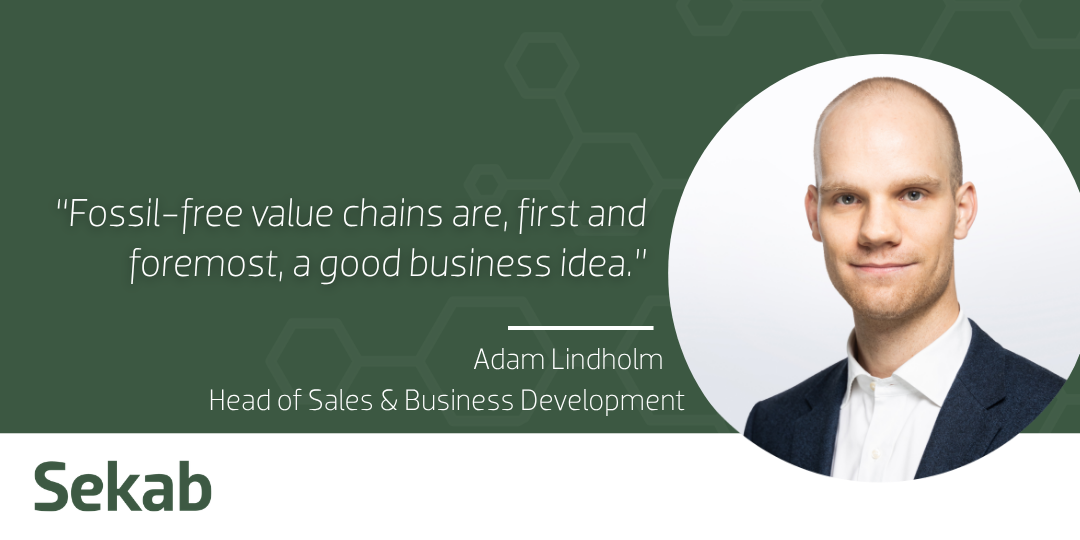
Fossil-free value chains are, first and foremost, a good business idea.
The past six months have made that increasingly clear. Volatile fossil prices, geopolitical turbulence and uncertainty in global trade have all come with a cost. Reducing fossil dependence is therefore not only about reducing emissions. It is about reducing exposure to risks that directly affect margins, predictability and competitiveness.
And that is where the discussion about European resilience becomes particularly interesting. Europe needs stronger value chains closer to home. But security of supply should not simply mean reproducing the same fossil-based value chains within European borders. We have an opportunity to build something better: competitive European value chains based on renewable raw materials.
That creates another kind of resilience too.
The record-low water levels on the Rhine are a good reminder that climate change is not a future scenario. It is already affecting logistics, production and the cost of doing business in Europe. Building resilience therefore means preparing for geopolitical disruption and trade uncertainty, but also for a physical world that is changing around us.
No single company or product will solve this. One tonne of fossil-free chemicals is, quite literally, a drop in the Rhine.
But we have to start somewhere. And from a business perspective, starting with solutions that are already available, produced in Europe and capable of reducing both fossil dependence and emissions seems like a pretty good place to start.

Adam Lindholm
Head of Sales and Business Development, Sekab