Our focus areas

Our focus areas
Sekab’s fossil-free chemicals are unique on the market. This also places high demands on both sellers and buyers to find pricing models beyond the prevailing fossil-based norm. Developing a new approach to pricing was a major focus area for Sekab’s responsible business efforts in 2024.
Chemicals remain predominantly fossil-based products, sold according to an old market logic tied to the price of oil. Leading market institute ICIS still provides weekly price indexes based on a model where they call around to buyers and fossil-based producers to ask about the week’s prices. When you overlay chemical price curves with the price of oil, it becomes clear how closely intertwined they are.
Sekab’s chemicals are not produced from oil and have no relation to that market index. Our raw material, ethanol, follows a different pricing logic. Convincing buyers who have sourced chemicals in the same way for their entire careers to adopt a new way of calculating prices is a process that takes time. “Of course, it’s easier to buy the way it’s always been done, but the industry is changing. There’s now a growing awareness of the need for sustainable alternatives. The next step is understanding that the added value of fossil-free chemicals also means they must be priced differently,” says Adam Lindholm, Head of Sales and Business Development at Sekab.
A sustainable deal must be fossil-free at every level— including in pricing
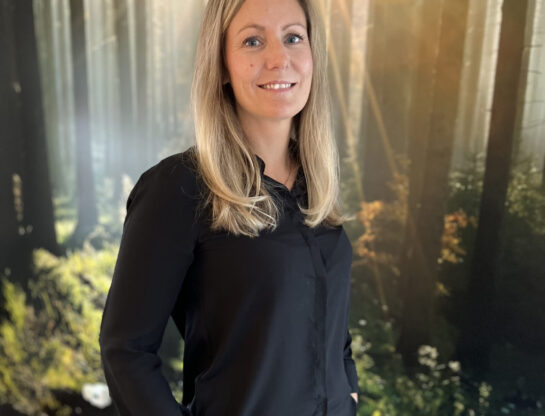
adam lindholm
head of sales and business development
Despite a weak industrial economy, demand for sustainable alternatives is growing. A clear trend is that large organizations are choosing specific production facilities to fully transition to fossil-free operations. They want to secure fossil-free volumes through multi-year contracts.
“We are the only company offering completely fossil-free alternatives produced in Europe. Naturally, those looking to transition want a partner they can rely on for the long term. A sustainable deal must be fossil-free at every level—including in pricing,” says Adam Lindholm.
To help customers feel confident using a non-oil-based pricing model, it’s crucial for Sekab to build trust by sharing knowledge about the ethanol market, both today and into the future. Sofia Winternell, Head of Procurement and Supply Chain at Sekab, has daily contact with ethanol producers regarding both upcoming purchases and longer-term price forecasts. “The strength of ethanol, beyond being fossil-free, is that availability is very strong. The challenge is that many industries want access to it, and competition is tough because bioethanol is an affordable way to source sustainable carbon atoms. Partnering with us means tapping into our network and long-standing supplier relationships,” she says.
In the process of explaining to customers how a different pricing model impacts the long term, another advantage has become clear.
Although ethanol-based chemicals tend to have slightly higher prices over time, they are far less volatile than oil-based chemicals.
“That’s a major advantage of ethanol—the price is stable. Since we can source ethanol from different producers and based on different crops, it gives us the flexibility to always find a cost-effective raw material. We can also adapt to what customers demand in terms of carbon footprint,” says Sofia Winternell.
Transforming industrial purchasing patterns and breaking the fossil dependency isn’t achieved overnight—but 2024 was a year when major steps were taken in the right direction.
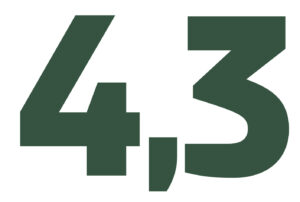
…out of five was the result when our customers rated us during the year.
The willingness to pay for sustainability is closely linked to having proof that you are getting what you pay for. Customers who choose a fossil-free chemical want to be able to demonstrate this in their own reporting and in communication with their customers.
Sustainability calculations can often be complex and difficult to navigate. In 2024, Sekab initiated a transition to calculating the carbon footprint of its products according to the international standard ISO 14067. This is a recognized methodology that makes it easier for customers to compare products.
Because the ISO 14067 method includes biogenic uptake—that is, the fact that the raw material for a bio-based product captures carbon dioxide as it grows—combined with the low process emissions from our facility, Sekab’s products have a negative carbon footprint when they leave the factory in Örnsköldsvik.
The chart compares Sekab’s bio-based ethyl acetate produced from corn or sugarcane with global and European averages for fossil-based ethyl acetate.